
Honeycomb Paper Samples: Define the Open Pattern
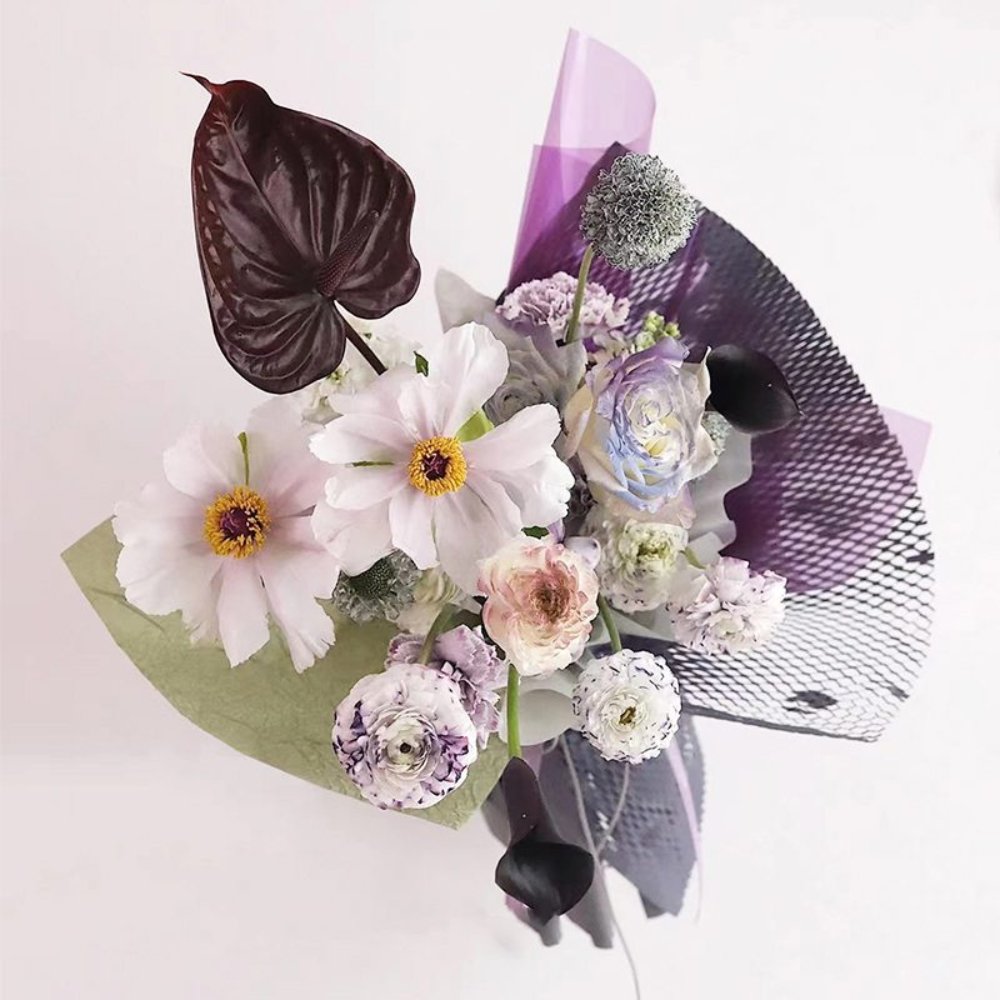
Open-pattern layer in a Honeycomb Wrapping Paper catalogue arrangement. Ask the supplier to identify the exact offered layer; neighbouring paper, film, flowers and props are separate references.
For a honeycomb-paper pattern approval, ask the supplier to identify the repeated openings and connecting paper regions on a sample in a defined presentation state. Keep that reference with the actual offered material and sample version. A product name or styled bouquet photograph does not provide a complete pattern specification.
For wholesale honeycomb wrapping paper, this gives the buyer a focused appearance-and-geometry task. The supplier should show which pattern is being offered, what sample state its reference represents and which details the approval covers. Keep the internal open-pattern decision separate from the nominal roll-length enquiry so a confirmed length does not become approval of an unspecified pattern.
Identify the actual material layer first
The Honeycomb Wrapping Paper page lists Material: Art Paper and shows both material close-ups and floral arrangements. Some arrangements contain several visible wrapping layers. Ask the supplier to identify the layer that represents the actual offered honeycomb paper before using a scene as the approval reference.
Retain the selected layer, supplier material reference and sample identifier together. Flowers, ribbons, printed props and neighbouring smooth wraps are styling context. They should not be treated as components of the same offered item or used to define its material construction merely because they appear beside the open-pattern layer.
Define the pattern reference within the material
Ask the supplier for a clear reference showing a complete opening and the connecting regions around it. Give relevant details short reference labels so purchasing can explain what is being approved. If numerical opening dimensions, connecting widths or repeat spacing are required, request the supplier’s values and labelled measuring locations rather than estimating them from the gallery.
Pattern record
Supplier information requested
Keep with the reference
Selected material
Actual offered paper or style reference
Product and sample identifiers
Opening reference
Marked complete opening or pattern detail
Supplier-labelled close view
Connecting regions
Relevant paper-bridge references
Defined locations, not image estimates
Repeat direction
Pattern direction against named material edges
Orientation labels
Presentation state
Condition represented by the sample view
Supplier description and revision
The retained catalogue fields do not provide those numerical pattern values. Leave a missing value open until the supplier answers. A visible repeating appearance is a useful starting reference, but it should not be expanded into an assumed cell shape, opening size or pattern density for every supplied version.
Close material reference with repeated openings and connecting regions. The picture does not supply cell dimensions, a repeat specification or an expansion limit.
Keep the presentation state identifiable
Ask which state the supplier’s pattern view represents and how it relates to the actual sample it provides. If the supplier shows the material in more than one presentation, label those references separately. The approval should identify the chosen state instead of relying on a general image of material draped around flowers.
Request a supplier-defined reference that makes the required pattern detail understandable. Do not invent an expansion ratio, a maximum opening or a procedure for preparing the material. Those are not supplied by the retained fields. The purchasing record needs the supplier’s applicable condition and reference, not an unstated conversion between different appearances.
Separate the pattern from colour and roll dimensions
The page gives a Pearlescent White colour entry and a 50cm × 8 yards dimension string. Keep those catalogue fields separate from the internal pattern record. A colour name does not state the opening geometry, and a roll dimension does not define the repeat or the width of connecting paper regions.
If the buyer selects a gallery appearance whose relation to the named colour is unclear, request the supplier’s actual offered reference. Likewise, an alternative colour should not automatically inherit an earlier pattern approval when the supplier proposes a different pattern version. Keep the accepted visual and dimensional scopes identifiable in the sample record.
Floral-use scene from the same product gallery. It is not a construction drawing or a confirmed set of supplied wrapping materials.
Record what sample approval actually covers
Identify the material, sample, presentation state and pattern details covered by the decision. Keep any requested change attached to the same marked reference. If the supplier changes the opening arrangement or another relevant detail, request a revised sample reference instead of approving the new proposal under an old photograph.
This is an approval of an identified pattern reference, not evidence of cushioning, tear strength, waterproofing or environmental certification. The retained product description contains broader catalogue wording, but any separate performance or material claim requires its own relevant documentation. Do not attach those promises to the pattern decision without supporting evidence for the actual offer.
Use a focused pattern RFQ
A concise request is: Please identify the offered Honeycomb Wrapping Paper material and provide a sample reference showing the internal opening pattern in a defined state. Mark the relevant openings, connecting regions and repeat direction, and provide any requested values with their measuring locations. Link the response to the actual sample and identify changed or alternative patterns separately.
Identify the offered paper layer and sample.
Mark the pattern details that require approval.
Keep the supplier-defined presentation state visible.
Retain alternatives and revisions as separate references.
Frequently asked questions
Does Honeycomb state an exact opening shape or size?
The retained fields do not provide those values. Ask the supplier for the actual offered pattern reference and any required dimensions.
Can a bouquet scene be used as a construction drawing?
Use it to locate an appearance reference, then identify the actual offered layer and request a clear supplier pattern record.
What should remain with the sample decision?
Keep the material and sample identifiers, marked pattern detail, presentation state, supplier response and accepted revision together.
honeycomb open patternpaper sample referencefloral packaging RFQ