
Florist Tissue RFQs: Define the Supplied Fold
What should a florist-tissue delivery-format enquiry define? Ask whether the actual proposed sheets arrive flat or in a specified folded presentation, then identify the fold arrangement, orientation and packed reference. Keep the opened-sheet dimensions separate from the outside size of the supplied presentation. A decorative paper fan or a rolled gallery display does not establish the shipping format.
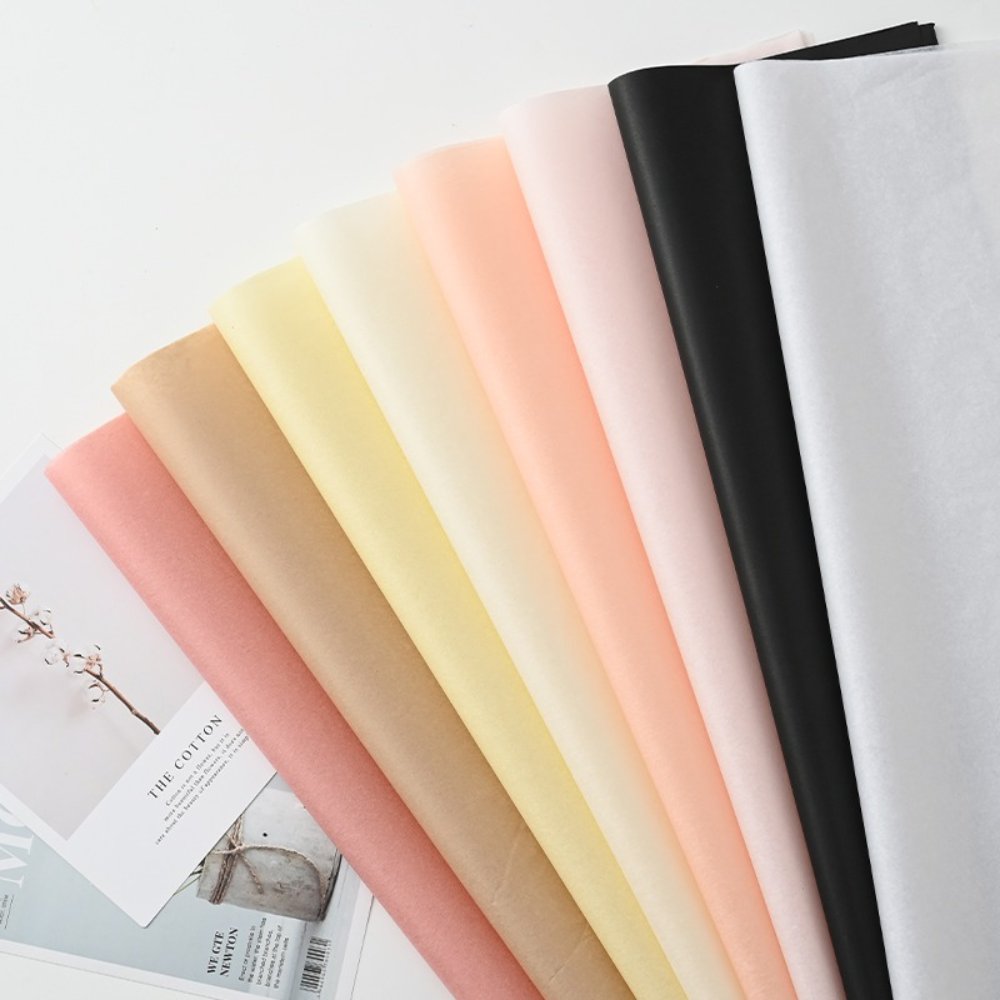
Official complete sheet-fan arrangement. It identifies the liner-tissue reference without establishing a supplied fold, pack count or current colour assortment.
Identify the tissue offer and its delivered presentation
Jiemi Pack lists Packaging Liner Tissue Paper with an 18g catalogue label. The saved product page identifies tissue paper and gives dimensions of 50 by 70 cm. Its gallery shows sheet arrangements and a styled crumpled-paper scene. It does not define a factory-supplied fold pattern for a commercial order.
For wholesale floral tissue paper, ask the supplier which actual presentation is proposed for the selected item. A buyer planning receiving and preparation needs to distinguish a flat-sheet offer from any folded proposal without guessing from the catalogue styling.
This purchasing question concerns the supplied fold and presentation. It is separate from interpreting the 18g weight entry, distinguishing film from tissue, counting another matte-paper offer or reviewing the appearance of a crease on a different Ouya wrapping material.
Buying field
Requested supplier response
Selected item
Exact liner-tissue reference, proposed version and relevant colour selection.
Delivered form
Supplier confirmation of flat sheets or the specific folded presentation proposed.
Fold reference
A drawing or identified sample locating the folds and showing orientation.
Dimension states
Opened-sheet reference and supplied-presentation outside dimensions kept separate.
Pack identity
How the supplier identifies the actual proposed group and its commercial unit.
Change record
Any alternative presentation and the buyer decision on that proposal.
Ask for an actual fold map where a folded offer is proposed
If the supplier proposes folded sheets, ask for a clear drawing or sample reference showing the arrangement. Identify which sheet edges and faces the reference represents. A short description such as folded tissue may leave the buyer uncertain about the presentation being compared.
Keep any supplier fold count or sequence attached to that reference. Do not supply an assumed fold pattern from the nominal sheet dimensions. Those dimensions do not establish how a particular factory will present the material for the actual order.
The enquiry should describe what information is needed rather than prescribe a folding technique for the product. If a buyer requests a particular format, mark it as a requirement awaiting the supplier feasibility response. A requested option is not a confirmed service or an available standard pack.
Official styled material scene. Crumpling and curling are gallery presentations and do not establish the shipping form or appearance-acceptance standard.
Keep opened dimensions and presentation dimensions distinct
The catalogue has a 50 by 70 cm dimension field. Ask the supplier to identify the state and reference represented by that declaration. If outside dimensions of a folded presentation are needed, request them in a separate field with the applicable orientation and units.
Do not divide the catalogue dimensions into guessed folded sizes. Such a calculation would assume an arrangement the source does not provide. Keep the actual supplier response separate from the buyer planning requirement until the proposed presentation is defined.
Likewise, a curled sheet in a gallery display is not proof of a roll supplied by length. Ask what one commercial unit contains and how it will arrive. Preserve the distinction between a display shape and a declared delivery format.
Define the comparison reference without inventing acceptance limits
Where the presentation matters to the order, identify a sample or supplier reference that represents the proposal. Record which aspects are being reviewed, such as the fold arrangement, orientation or outside presentation. Keep the observation tied to that identified item.
A specified fold and a defect decision answer different questions. One defines an intended presentation. The other concerns whether an observed condition is acceptable under an agreed review. Do not turn a photograph of crumpled tissue into a universal appearance standard or a completed transit test.
No numerical crease allowance, fold tolerance or surface-damage threshold is provided by the inspected page. If those requirements matter, ask the relevant parties to agree their scope separately. The supply-format record should remain clear about what has actually been confirmed.
Official liner-tissue sheet reference. Request supplier dimensions and format for the actual delivered proposal; no strength or water resistance is inferred.
Connect the format with the commercial unit
Ask how the proposed presentation relates to the supplier quoted unit. Identify the tissue item and the actual supplied grouping without importing a sheet count from another wrapping-paper product. A familiar material name does not make different commercial units interchangeable.
If an alternative fold or flat presentation is offered, retain it as a separate option. Ask which applicable dimensions, grouping or preparation information changes. Keep any commercial dependencies in the supplier response instead of creating an assumed price or packing advantage.
The actual delivery format also remains separate from material properties. A folded or flat proposal does not establish water resistance, fibre composition, environmental qualification or a particular use result. The gallery can identify the material appearance without proving those additional claims.
Retain the agreed presentation for receiving and reorders
Attach the accepted item reference, format description, fold map where applicable and relevant supplier dimensions to the quotation revision. The receiving team should be able to identify which presentation was proposed and record a specific discrepancy if an actual delivery differs.
For a later order, cite the retained format reference and ask whether it still applies to the proposed item. Preserve any revised presentation as a new option with a clear decision. This supports a repeatable purchasing conversation without claiming that a future shipment or a material property has already been verified.
Buyer FAQ
Does the sheet size define its folded delivery size?
No fold arrangement follows from that field alone. Request the supplier presentation and its separately identified outside dimensions.
Does a curled display prove supply as a roll?
No. Ask which commercial form and unit the supplier actually proposes.
Can a buyer request a particular fold?
State it as a requirement and obtain a feasibility response. The catalogue does not establish that every requested presentation is offered.
Does the fold reference establish a crease tolerance?
No. Intended presentation and an agreed appearance-acceptance requirement have separate scopes.
What should be retained for the next enquiry?
Keep the item identity, delivered form, orientation, any fold map, applicable dimensions and supplier confirmation together.
Identify the material on the florist liner-tissue page, request the proposed supplied-presentation reference, and consult the floral-packaging purchasing blog for related order questions.
Confirm the actual delivered form and item identity.
Separate opened and supplied-presentation dimensions.
Retain the agreed format without inventing material performance.
wholesale tissue paperB2B supplier sample record